
Is this the programme you're looking for?
Why do social inequalities form? Are you interested in knowing how welfare policies or activism can help to reduce social inequality? Then this master track might be the right choice for you.
Practical information
- Type
- Master
- Degree
- MSc
- Mode of study
- Full-time
- Instruction language
- English
- Duration
- 1 year
- Study points (EC)
- 60
- Location
- Campus Woudestein
- Start date
- September
- Application Deadline (EEA)
- 1 June
The study programme in a nutshell
This specialisation prepares you to be a public sociologists who is well-equipped to bridge analytical and critical perspectives on social inequalities around the world. You will examine various dimensions of inequality - such as wealth, race, gender, and spatial distribution - investigating the complex interplay among social structures, institutions like families and schools, and individual behaviours. This programme brings a unique interdisciplinary perspective to the study of social inequality, and sheds light on how we as individuals, groups, and governments can reduce it. The theoretical breadth of the programme equips you with essential skills in critical analysis and varied methodologies, preparing you to address these pressing societal challenges.
Watch the study programme video

What you will learn
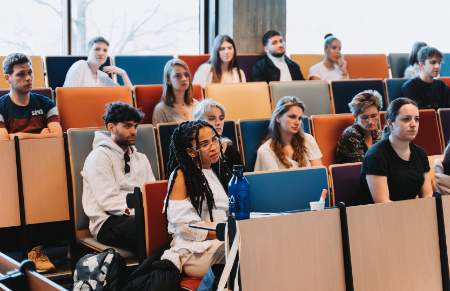
In an interactive and small-scale environment, each core course is composed of a series of lectures and tutorials. The lectures present the main theoretical and empirical insights about the topic of the course. In the tutorials, students learn to analyse and apply these insights by discussing and presenting various assignments in small groups.
Is this the right programme for you?
This master offers:
- A unique interdisciplinary perspective on social inequalities
- Insights into the causes and consequences of social inequality, while shedding light on paths for change
- An intersectional examination of various dimensions of inequality—such as wealth, race, gender, and spatial distribution—investigating the complex interplay among social structures, institutions, and individual behaviours
- Renowned, active and engaged professors with extensive expertise
- Small-scale, interactive programme
- An expansion of your professional network with participants from over multiple countries
Want to know more? Meet us here
Career opportunities after graduation
Graduates of this master track can pursue careers in the government sector, journalism, public administration or at NGOs.
What do our students think?


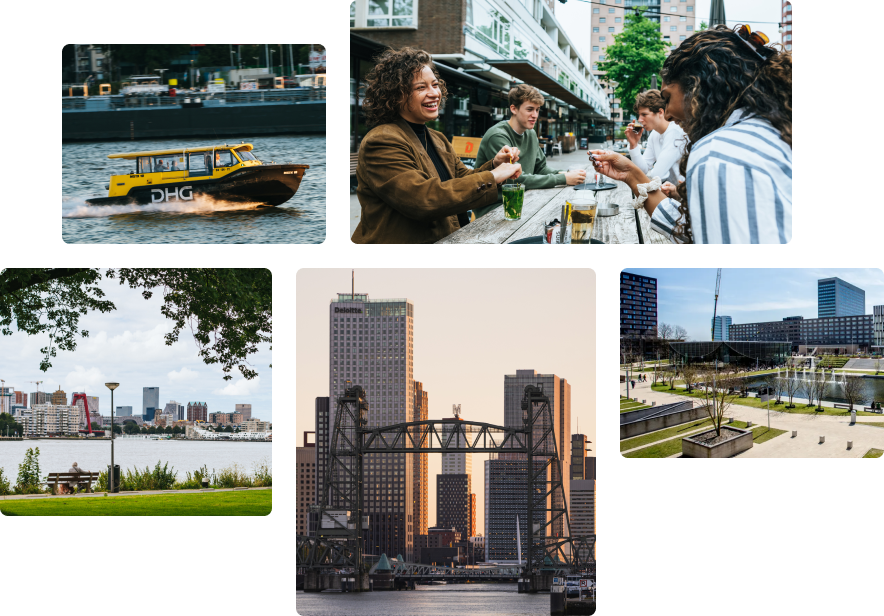
Your student life starts in the vibrant city of Rotterdam
This vibrant city offers a variety in art, nightlife, culture and sports. Everything you wish for to enjoy your student life to the fullest.
Not sure yet about your choice? Request a brochure!
Choosing a study is quite a challenge! Still in doubt about this study and want to have a good overview? Receive a clear digital brochure for this study.