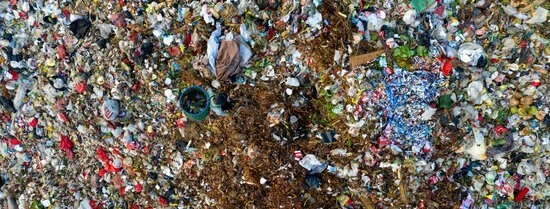
Currently 4 billion people live in cities, but according to recent projections in 30 years that will be almost 7 billion. That means that around the world every 5 years an amount of people equivalent to the total population of the EU will migrate to cities. This transition is driven by the fact that cities offer opportunities for improved living conditions, better access to education and more work. In other words, cities are in principle an important vehicle for increased prosperity and to lift those currently in rural areas from poverty. However, the current scale of migration towards cities also puts enormous stress on sustainable urban management and makes it ever more difficult to keep cities inclusive. In fact, the current and expected influx towards cities could aggravate the existing urban cleavage between haves and have nots and thus destabilize cities and countries as a whole. Countering this is a complex multi-faceted problem. In one of their projects, DoIP researchers focus on the adverse environmental impact of the rapid growth of cities, with special attention to management of air quality and waste.
Often the poorest inhabitants suffer most from these adverse effects and with the expected results the DoIP team aims to make cities more inclusive in this respect. Fortunately, proper waste management is increasingly recognized as an important element of more inclusive policies and a transition towards “Zero Waste Cities” is gaining momentum in China and around the world. For instance, cities like Rotterdam and Amsterdam have also pledged to work towards zero waste. In this project the team will develop analytical tools to clarify the effects of emerging waste management systems in cities, design an approach for infrastructure management that is more inclusive and will validate their results in cities in the Netherlands and in China. In this project, the DoIP team collaborates with researchers from the TU Delft and the Netherlands Environmental Assessment Agency (PBL) and with Peking University, City University Hong Kong and Tongji University in China. Together the partners analyse how in neighbourhoods of major Chinese and Dutch cities waste is currently collected, processed and recycled. They will also study the value chain for waste management in those locations, which roles organizations and social groups play in the chain and how they are affected by possible changes to the way this chain is organized. Systems dynamics modelling and agent based modelling are used to present alternative ways of organizing waste management. Workshops will be held with various stakeholders to discuss promising alternatives to current approaches and to agree on the adoption of changes. The consortium received financial support from both the Dutch Research Council and the National Science Foundation China, for a total of nearly € 2 million.
Publications
Dominika Teigiserova - Urban Greenery: Making Collaboration Easier
In cities around the world, urban greenery is increasingly recognized as a vital foundation for sustainable cities. Urban greenery plays more than an aesthetic role, it also helps to create healthier and more resilient cities. Green spaces provide crucial ecosystem services, enhance public health, boost economic vitality, and build social cohesion and sense of belonging. From parks and gardens to green walls and roofs, urban greenery is an essential part of what makes cities healthier and more livable.
Publications
Ricardo Abussafy - Circular economy from the ground: Socioeconomic Impact of the Deposit-Return System on Waste Pickers in Amsterdam and Rotterdam
This study explores informal waste pickers' role, challenges, and organizational strategies within the Netherlands’ expanding Deposit-Return System (DRS), focusing on Amsterdam and Rotterdam. By employing documentary research and urban observation, the research offers a multifaceted view of how waste pickers navigate and contribute to urban recycling